YAMAHA AVC-50 Integrated Amplifierreceiver Preamp Amplifier
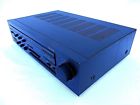
( Brand: Yamaha ), ( Model: AVC-50 ), ( Type: Integrated Amplifier ), ( Country/region Of Manufacture: Japan )
Review YAMAHA Vtg Integrated Amplifierreceiver Built Preamp
The AVC-50 Vintage Yamaha Integrated Amplifier-Receiver-Preamp Amplifier is a remarkable piece of audio technology that harks back to the golden era of Hi-Fi. This vintage Yamaha model, with its timeless design and robust construction, is a testament to the brand's commitment to quality and innovation.
The AVC-50 integrates an amplifier, receiver, and preamp into a single unit, providing a comprehensive solution for your audio needs. The amplifier section delivers a powerful 50 watts per channel (into 8 ohms) of pure, clear sound, capable of driving a wide range of speakers. The receiver component includes an FM tuner, ensuring you never miss your favorite radio stations. The preamp section allows for seamless integration with external sources, such as a CD player or turntable.
The AVC-50 boasts a classic analog sound, with a warm, rich tone that brings out the subtleties in your music. The vintage look, with its wood veneer finish and brushed aluminum controls, adds a touch of elegance to any room. The control panel is intuitive and easy to use, with clear indicator lights and knobs for volume, bass, treble, and balance.
This vintage Yamaha amplifier-receiver-preamp amplifier is not just a piece of audio equipment; it's a piece of history. It's a testament to the enduring appeal of vintage technology and a reminder of the joy of listening to music the old-fashioned way. With its robust build, classic sound, and timeless design, the AVC-50 is a must-have for any audiophile or music lover.
Pros of buying a AVC-50 Vintage Yamaha Integrated Amplifier/Receiver/Preamp:1. Rich, Warm Sound: The AVC-50 is known for its rich, warm sound that is often appreciated by vinyl enthusiasts.
2. Vintage Design: The vintage design of the amplifier can add a unique aesthetic touch to any home stereo setup.
3. Versatility: The integrated amplifier/receiver/preamp can handle both vinyl and digital sources, making it a versatile choice for music lovers.
4. Durability: Vintage Yamaha products are known for their durability and longevity, making the AVC-50 a good investment for those looking for long-term use.
Cons of buying a AVC-50 Vintage Yamaha Integrated Amplifier/Receiver/Preamp:1. Limited Power: Compared to modern amplifiers, the AVC-50 has limited power output, which may not be suitable for larger rooms or high-end speakers.
2. Limited Connectivity: The AVC-50 has fewer connectivity options than modern amplifiers, which may limit its compatibility with newer devices.
3. Requires Maintenance: Vintage electronics like the AVC-50 may require more maintenance than modern devices, which can be time-consuming and expensive.
Conclusion:The AVC-50 Vintage Yamaha Integrated Amplifier/Receiver/Preamp is a great choice for music lovers who value rich, warm sound and vintage design. Its versatility and durability make it a good investment for those looking for long-term use. However, its limited power output and connectivity options may not be suitable for everyone. If you are willing to put in the time and effort for maintenance, the AVC-50 can provide you with a unique and satisfying listening experience.
Recommendation:If you are a vinyl enthusiast or simply appreciate the warm sound of vintage electronics, the AVC-50 Vintage Yamaha Integrated Amplifier/Receiver/Preamp is worth considering. However, if you require more power or connectivity options, you may want to consider a modern amplifier that better suits your needs. Ultimately, the choice depends on your personal preferences and requirements.
Details:
The rear apron of AVC-50 is much like that other integrated amplifiers, with input and output jacks for video audio sources, insulated clips connections to front speakers, five ac outlet's, three them switched. The processing mode switch has a defeat setting that passes unaltered input signals to front and rear speakers. The capabilities of AVC-50, however, extend well beyond mere amplification and program selection. The recommended mode is as a pre amplifier for entire system, with its internal power amplifiers driving pair of rear speakers and separate stereo amplifier front.
It can be used to exaggerate the detail of a signal before is recorded and again, if desired, enhance playback program. The hall surround effect is similar, but addition of an adjustable analog time-delay circuit before comb filters makes sound more suggestive a large music. 05 percent total harmonic distortion. A sharpness control applies similar correction to the edge outlines in picture, while video level merely adjusts overall signal for suitable brightness.
This system is in near new condition. A separate group of video-recording buttons selects the output from TV, DP, or one VCR. In all cases, it is suggested that the on off button be used to compare appearance of original program with enhanced during adjustment process. A row of eleven small push buttons select the program source supplied to tape-recorder outputs.
The VCR 2 inputs are duplicated on front panel, a convenience for temporary use of that is not part regular system. It has been fully tested and works perfectly. Its power section is rated to deliver 45 watts per channel continuous output into 8-ohm loads 50 6 ohms from 20,000 Hz with no more than. The outputs are separate for audio and video sources, permitting a program to be recorded or dubbed with different track from its original one.
A similar control selects the picture source for viewing on monitor. The AVC-50 can be used several ways in an audio video entertainment system. Finally, the AVC-50 can be used solely as a pre amplifier for four-speaker system, with external power amplifiers both front and rear channels. Small lights on the front panel indicate selected source.
The large volume knob is only regular operating control. A small processing mode switch on the front panel has three positions for enhancing stereo sources in four-speaker system: natural surround, hall and Dolby surround. The stereo surround modes do not function with mono programs, so Yamaha has provided two simulation for also delectable processing switch. The Yamaha AVC-50 does not have audio tone controls only concessions to frequency-response adjustment are buttons select bass extension or high filter features.
The simulated stereo circuit performs comb-filtering operation on mono signal, sending one channel to front and rear speakers left side other right. Original price: 449. Another operating mode might be as a conventional integrated amplifier for stereo sound system, including switching control of several video sources, but its unique sound-processing modes are not usable in such configuration. The AVC-50 does, however, provide audio processing facilities not ordinarily found in integrated amplifiers.
An on off button activates these circuits, and another selects either the incoming playback or outgoing recording signal for enhancement. The last is well-known matrix-decoding system with time delay used for reproducing soundtracks of movies and video recordings made Dolby surround process. The audio recording options include phono, CD, tuner, auxiliary, two audio tape decks, and sound portions of programs from a TV set, videodisc player DP, VCR's.
The audio amplifier inputs include all of these sources, which are selected by pressing one end or other a rocker switch. The simulated surround circuit is similar, but it adds adjustable time delay to mono signal before filtered and divided. This arrangement might be necessary if speakers having unusually low sensitivity are used in a large room, which would require more amplifier power than the AVC-50 can provide. The Yamaha AVC-50, finished in black, measures inches wide, 12 deep, and high, it weighs 14 pounds.
Yamaha's own natural surround system, based on comb filters, can be used to add a sense of space particularly depth most stereo programs. Up for sale is this Yamaha AVC-50 integrated amplifier receiver. A knob next to the processor switch continuously varies delay from 10 30 milliseconds. A small detail knob compensates for the loss of when recording video program.
In addition to controlling the AVC-50s key front-panel features volume, video and audio input selection, front rear levels, muting, power switching, remote control performs comparable functions for other Yamaha components identified by an rs logo that can be connected amplifier, including tape decks, CD players, record players. Alternatively, the AVC-50 could drive front speakers and use an external amplifier for rear pair. The remaining front-panel controls are for video-enhancement functions of AVC-50. An input balance knob on the front panel is used principally to channel levels before they are processed by any of surround modes, and conventional left-right signal balancing done with a small screwdriver adjustment rear apron amplifier.
Yamaha AVC-50 the is comparable in size and shape to a typical medium-power integrated audio amplifier, but it provides switching signal-processing functions for several video sources addition usual inputs.
part #: avc50 prices
- $99.85-$135.00
specifications cassettevintagee:
- brand: Yamaha
- model: Avc-50
- type: Integrated Amplifier
- country/region of manufacture: Japan
Offer cassettevintagee:
- Started: January 29, 2018, 8:17 am
- Sold: 0
- bids: 0
- quantity: 1
- best offer: false
Ratings:
- Good seller 01-29-18
- Great item and fast shipping 01-28-18
- Nice product and great shipping. 01-27-18
- Thank you for great shopping experience. 01-28-18
- Fantastic, thank you! 01-29-18
Seller cassettevintagee:
- city: Sacramento, California
- zipcode: 95816
Shipping cassettevintagee:
- type: Flat
- cost: $35.0
- handling: 3 days
Payments cassettevintagee:
- PayPal
General cassettevintagee:
- in stock: Yes
- consumer electronics > vintage electronics audio video consumer electronics > vintage cassette decks
Returns cassettevintagee:
- details: MUST STILL BE UNWORN, STILL HAVE ITs ORIGINAL TAGS AND IN SAME CONDITION TO RETURN
- time: 30 Days
- policy: returns accepted
- type: Money Back
- paid by: Buyer
Yamaha AVC-50 Is Similar To:
- A-17 Yamaha Natural Sound Stereo Amplifier New (54.8% similar) Yamaha A-17 natural sound stereo amplifier this item is brand new in the box...(November 12th, 2018)
- A-30 Yamaha Vintage Natural Sound Stereo Amplifier Graphic Equalizer (52.8% similar) Physically, this equipment has scratches. Please - do not bid if you cannot pay. All controls are responsive, however the lights on equalizer sliders do not illuminate. We keep a smaller portion of each sale. Scuffing, small dents and other signs of normal use. All we ask is that you pay to ship it ...(May 9th, 2018)
- A-550 Yamaha Vintage Amplifier (79.4% similar) Minor scratches and scuffs only...(October 1st, 2018)
- A-720 Yamaha Natural Sound Stereo Amplifier Model (55.2% similar) Hard to find this model. In working condition...(August 31st, 2018)
- A-760 Yamaha Natural Sound Integrated (61.3% similar) Its a rarity - have you ever seen one. Try and find online they are virtually non existent. According to my father, and also other unofficial sources on audiophile blogs, the A-760 was subject of a lawsuit by another oem equipment possibly carver unit discontinued in its first model year - creating ...(April 29th, 2017)
- A-960ii Yamaha Natural Sound Stereo Amplifier Model Number (50% similar) Selling a used Yamaha A-960II natural sound stereo amplifier. Feel free to reach out with any questions. Item still powers on and has not been used for years...(May 31st, 2018)
- Ac-66 Yamaha Vintage Natural Sound Stereo Amplifier Model Yst (56.6% similar) ...(July 31st, 2018)
- Av-34 Yamaha Stereo Amplifier Model (68.5% similar) Case has scratch, front corner, and dent, back corner see photos. For sale Yamaha stereo amplifier model AV-34 very good used condition...(August 20th, 2017)
- Av-65 Yamaha Clean Integrated Amp (76.1% similar) Clean Yamaha AV-65 integrated amplifier with eq phono input see pictures for clear indication of condition. This has been powered up and tested on all inputs except tape record in the turntable input...(June 2nd, 2017)
- Avc-30u Yamaha Natural Sound Stereo (52.1% similar) All outputs work. Unable to test phono and tape remote control. Unable to test video in out. Comes with remote and tuner control cable. For sale Yamaha AVC-30U natural sound stereo amplifier good amplifier-works well. Tuner remote control works. All audio inputs work. Remote control works well. ...(August 29th, 2017)
- Avx-500 Yamaha Vintage Rare Natural Sound Stereo Amplifier Tested Working (55.9% similar) Please see pics for cosmetic condition. Receiver only. This Yamaha amplifier is pre-owned and shows signs of wear such as scratches, dings, scuffs or dust from storage...(October 15th, 2018)
