RCA MI-1356 Photophone Cinema
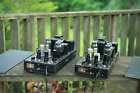
( Brand: Rca ), ( Manufacturer Part Number: MI-1356 ), ( Type: Monoblock Amplifier ), ( Country/region Of Manufacture: United States )
Review RCA Pair Mi Photophone Era Black Cinema Amps Matched Working
The RCA 1356 Photophone Cinema, a relic from the 1950s, is a captivating piece of vintage technology that will transport you back in time. This unique device is a combination of a record player and a projector, offering a cinematic experience like no other.
The RCA 1356 Photophone Cinema features a 16-inch record player with a built-in speaker system. The turntable is designed with a smooth, easy-to-use tonearm, allowing you to play your 7-inch vinyl records with ease. The sound system delivers rich, full-bodied audio, ensuring that every note and lyric is crystal clear.
The heart of this device, however, is its 16mm film projector. The projector is capable of projecting 16mm films onto a screen, providing a cinematic experience in the comfort of your own home. The projector comes with a built-in light source, eliminating the need for external lighting.
The RCA 1356 Photophone Cinema is a perfect blend of style and functionality. Its sleek, vintage design with a glossy black finish makes it a beautiful addition to any home decor. The device is easy to use, with clear instructions and simple controls.
This RCA 1356 Photophone Cinema is not just a piece of technology, but a time machine that takes you back to the golden age of entertainment. It's a great way to enjoy classic films, listen to your favorite vinyl records, and relive the nostalgia of a bygone era. Whether you're a history buff, a music lover, or just someone who appreciates unique pieces of technology, the RCA 1356 Photophone Cinema is a must-have.
Pros of buying a RCA 1356 Photophone Cinema 1950:1. Historical significance: This device is a piece of vintage technology with a rich history. It was one of the first long-distance telephone systems that used optical signals instead of electrical ones.
2. Novelty factor: The RCA 1356 Photophone Cinema 1950 is a unique collector's item that can add an interesting conversation piece to any home or office.
3. Potential for restoration: Many vintage electronics can be refurbished and restored to their original condition, which can be a rewarding hobby for some people.
4. Investment potential: Vintage technology often appreciates in value over time, especially if it's in good condition and well-maintained.
Cons of buying a RCA 1356 Photophone Cinema 1950:1. Functionality: The RCA 1356 Photophone Cinema 1950 is primarily a collector's item and may not function as a modern-day telephone. The technology is outdated, and parts may be difficult to find or repair.
2. Maintenance and repair: Vintage electronics require more maintenance and care than modern devices. This can be time-consuming and costly.
3. Availability and price: Due to its rarity, the RCA 1356 Photophone Cinema 1950 can be difficult to find and may be expensive to purchase.
4. Compatibility with modern infrastructure: The RCA 1356 Photophone Cinema 1950 may not be compatible with modern telephone lines or networks, which could limit its usefulness.
Recommendation:The RCA 1356 Photophone Cinema 1950 is an intriguing and historically significant piece of technology. However, it's important to consider its potential drawbacks, such as limited functionality, maintenance requirements, and cost before making a purchase. If you're a vintage technology enthusiast with the time, resources, and appreciation for historical artifacts, the RCA 1356 Photophone Cinema 1950 could be a worthwhile addition to your collection. But for those looking for a practical, modern-day telephone, this device may not be the best choice.
Details:
EDP amongst the very last of RCA's Camden, NJ, USA 1930s lower power prewar builds these were still in production postwar for a while. They have the stark, and large appearance of amps designed built in prewar era long oversized chassis, heavy black crinkle finish all octal pins. Matching bottoms made from period correct Masonite and rubber feet were added.
About 25 years ago, we stumbled on a set at collectors estate that appeared to have gotten these two the same time. The heavy black crinkle paint has numerous age related flaws scuffs, worn areas, a few hole covers, and errant screw holes here or there from many years of cinema life.
Your chance to buy these now with out a buyers war. The mi 1356 was designed by Rca in 1930s it produced throughout WWII for signal corps, and then into late 1940s after war. I have had these for many years that reason very unique and enjoyable from the scarce 1940s period, with all big base octal tubes they a special sound, so 1930s era amps do.
Later designs by Rca for this use would more modern 8 pin tubes, and smaller, higher powered pent odes, regulated supplies vs these majestic 6l6g large bottles. Both amps are presently working be sure to watch the brief test video below, though neither perfect yet. The mi 1356 was also used a service, testing and backup amplifier for larger cinemas at times. Both received a very mild restoration several years ago, including some fresh USA Prague caps.
Default overseas shipping the global program. The Rca mi 1356 was built in house by. The amps featured integrated Peck photocell gain stages, and a very mild adjustable tone circuit.
Just what you'd expect to see of mostly original amps the 1930s 40s era. A fairly sizable pair of amps, both are model mi sold along other 1940s 50s photophone systems though not documented any place I could find. All original transformers most of the cloth wires were preserved.
Many of these were produced during wartime, when amps found broad use as the main amplification for large gathering areas, where films shown to soldiers, and other groups well into 1950s thanks fairly powerful pp 6l6 circuit. Both appear to have been assembled early in 1950 fulfill a final contract. Allot of the time consuming setup work like Bakelite Rca input jacks and binding posts has been already done.
At some point these were set up 6l6pp but the 6l6s are currently running in tirades mode a rarely done and good sounding thing to do. The unique single chassis was designed for semi-portable cinema sound system use. We had a tech do minimal restoration to get them on the road, line cords. Input sections are massive with multiple gain stages not needed for line level.
The massive input, orig for Peck sound heads front end of course has a bit too much gain that can be little touchy. And, they are not at all perfect as is normal from amps of this era course totally quite times there a small hum floor on both.
They also have notable slam and the good dynamics when pushed that most of us love. As I write this, am listening to these amps they sound quite nice, and its getting late, still don't want turn them off: be sure view the test video below. It appears, at present, the pp 6l6g are in tried mode, which is likely best way to enjoy you can use a 6l6 or pent ode mode with simple strapping changes.
See exhibit a thru j. Both amps working with nice sound be sure to watch the brief test video below, though as said above neither are perfected yet. Once you get the fussy input set right its tricky, these amps feature exceptional detail. Being classic 6l6 amps, from this era they have quality potted output transformers, with nice tap selections.
Cosmetics fair, they present very nicely, stately and old. Very seldom to you see a nice pair like this,in reasonably shape and can take years match them up. EDP power and output transformers guaranteed good, no DOA. They're even marked with a final assembly date of February, 1950 see photo exhibit and tags serial have spread, otherwise they seem to be remarkable near perfect match.
You won't see a set this nice around for long while so seriously consider buying it now they will sell very quickly. They are presently setup just how many would want for home WiFi monoblock use and only used a few hours over the past 20 years. After 10 years of storage I brought each up on a Mauriac to 100v both sounded nice and ran cool very little or no preamps signal level is needed must be carefully adjusted prevent overloading all the gain stages, depends your output impedance selection had good results with 8ohm out.
These were some of la stamps to leave the Rca plant, as they bear markings from late 1940s and both assembled led a few years later in early 1950s. The work was done only to make ready amps with minimal disturbance for an audition so all of gain stages are still active there is at times too much gain, you if use a preamps, need very little signal.
Speaker output impedance selections are very WiFi friendly, with 4, 8, 16 and 32 ohm taps. Amps present well, and are not at all perfect. If you desire old Rca, like it was in the early to mid 1940s.
Of course, being from the 1940s - were never sold as matched pairs.
specifications cassettevintagee:
- brand: Rca
- mpn: Mi-1356
- type: Monoblock Amplifier
- country/region of manufacture: United States
Payments cassettevintagee:
- PayPal
Returns cassettevintagee:
- details: Happiness assured! If unhappy. please contact directly and immediately for adjustment or refund. Buyer must pay return shipping.
- policy: returns accepted
- time: 14 Days
- type: Money Back
- paid by: Buyer
Shipping cassettevintagee:
- handling: 4 days
- type: Calculated
Ratings:
- Great deal! Thanks a lot! 02-16-17
- Thanks! 02-10-17
- Mint condition and amazing packaging. Thank you so much 02-03-17
- My friend said he received Pair Daven, thank you very much 02-18-17
- The tubes were as described, strong and truly spectacular sounding. 02-23-17
General cassettevintagee:
- consumer electronics > vintage electronics audio video consumer electronics > vintage cassette decks
- in stock: Yes
Offer cassettevintagee:
- best offer: false
- quantity: 1
- Sold: 0
- Started: February 28, 2017, 10:54 pm
- bids: 0
Seller cassettevintagee:
- zipcode: 23930
- city: Crewe, Virginia
Rca MI-1356 Is Similar To:
- 5876a Rca Nos Pair 2 (42.1% similar) New and never used, made in USA offers, questions or other tube types. A pair 52 of nos nib Jan Rca 5876A vacuum tubes...(January 24th, 2018)
- 7868 Rca Three Ge Black Plate Vacuum Power Tubes Tests Very (31.3% similar) Within my own collection of vacuum tube radios and hi-fi, this has worked very well provided great results. Power tubes s. Now on to this listing. Bid with total confidence. Using my tester as noted above where any reading is considered good. These tubes tested strong and will provide great results...(March 20th, 2018)
- 85965 Unbranded Pair Of Vintage Rca Victor Type Tube Amplifiers (32% similar) These are from matching phonographs and both untested. Two tubes are Rca ix types. These amps are worthy of restoration as they great sounding with the 245 in push pull. They are complete with all tubes, cords, and in good cosmetic condition. This is the power used in several Rca victor radio model'...(October 18th, 2018)
- Ba-4c Mi-11223-b Or Ba14 Rca Rare Working Condition Broadcast Monitor Amplifier (31% similar) The left hand cinch plug on rear of unit has a small chip at top right phenol electrical performance is not affected. Components that were bad or out of tolerance have been replaced. The sockets provided are not official part nos however, they fully functional as configured. The chassis exterior ...(July 25th, 2018)
- Mi-12198 David Bogen Rca Estate Pair Of Hard Find Hifi Tube (33.3% similar) Part: MI-12198 prices...(September 12th, 2018)
- Mi-4283-m Rca 1930s Victor Mi-4283-j Photophone (50% similar) I will carefully pack the unit and send it by insured fed ex. The has not been tested and is in absolutely unknown working condition. The shipping calculator is often incorrect. I can only guarantee the tubes, which have been checked on a TV-7 tester and found to be good. The amplifier is in ...(February 22nd, 2017)
- Op-6 Op-7 Rca Pair Vintage Portable Tube Broadcast Mixer Amp Preamp Unrestored (34.8% similar) Front covers are missing on both units the handles units deteriorated. For sale is an Rca OP-6 preamps and OP-7 4 channel broadcast mixer. Selling for parts or restore only. All tubes checked out okay on my TV7 tube tester. All trans are good units part of a lifetime collection radio engineering ...(March 18th, 2019)
- 88-a Rca Vintage 1940s Type 88a Pressure Broadcast Microphone Harp Mic Working Cond (35% similar) Rca 88 a microphone in working condition and complete with swivel connector mount. Microphone appears to be all original, not cleaned or restored. Microphone was tested and works well. Shows some wear, please see all photos for condition...(April 14th, 2016)
- Sa-155 31-5000 Rca Vintage 2 Channel Integrated Stereo Amplifier Tested And Working (26.7% similar) By purchasing items with the parts or not working condition, you are acknowledging the item already has defects and and is not may not be fully functional. Ships with stereo amplifier only. As is buyer agrees to accept item without the right to criticize if itemise imperfect. There is normal wear ...(July 19th, 2016)
- 6l6gc 9377a Rca Langevin Mi 9377 Powerful From 1953 Cinema Amp Works Listen To Video (28.1% similar) As you can see, this is fixed up for home WiFi use. A ventilated, Masonite bottom and heavy duty, nos rubber feet. Angevin, a former engineer of bell labs, and western electric he founded his own company, producing very similar designs. The Rca mi 9377 was introduced in the early as a more powerful ...(March 31st, 2016)
- Vt-229 6sl7gt Rca 2 Red Base Black Plate 5691 Ecc35 6sl7w 6sl7 Nos Tubes Amazing (29.1% similar) Remember you get what you pay for. They are matched with matched date codes. These tubes are simply beautiful they are both in m,int condition. Both tubes are 100 guaranteed to work amazing in your stereo pre amplifier tube gear both tubes fully tested strong and tested very close to each other. ...(June 18th, 2016)
